
BaZi: The Five Elements
Nature’s Code in Your Birth Chart

Before we can truly read a BaZi chart, it helps to understand the language it speaks.
And that language is elemental.
In Chinese metaphysics, everything - your body, your emotions, your seasons of life - is shaped by a dynamic interplay of the Five Elements:
Wood, Fire, Earth, Metal, and Water.
Each element has its own characteristics, season, and role to play.
But they don’t exist in isolation. They move in relationship - supporting, shaping, and sometimes challenging one another.
This is what makes BaZi so fluid, so alive.
There are three key cycles at the heart of this system:
The Cycle of Creation - how energy flows and nourishes
The Cycle of Depletion - how energy can be drained
The Cycle of Control - how balance is maintained
Understanding these cycles is like learning the grammar of a new language.
Once you understand how the elements interact with each other you begin to see patterns in your own chart and life more clearly.
In this post, we’ll explore the essence of each element, how they interact, and why this matters when reading your BaZi chart.
Because beneath the surface of your personality lies an energetic story - and it speaks in Earth and Fire, in Metal and Water, in Wood reaching toward the sun.
Let’s begin with the Cycle of Creation (Productive Cycle) which describes how the Five Elements - Wood, Fire, Earth, Metal, and Water - support and give rise to one another in a continuous loop of growth and nourishment. This cycle flows in a clockwise direction.
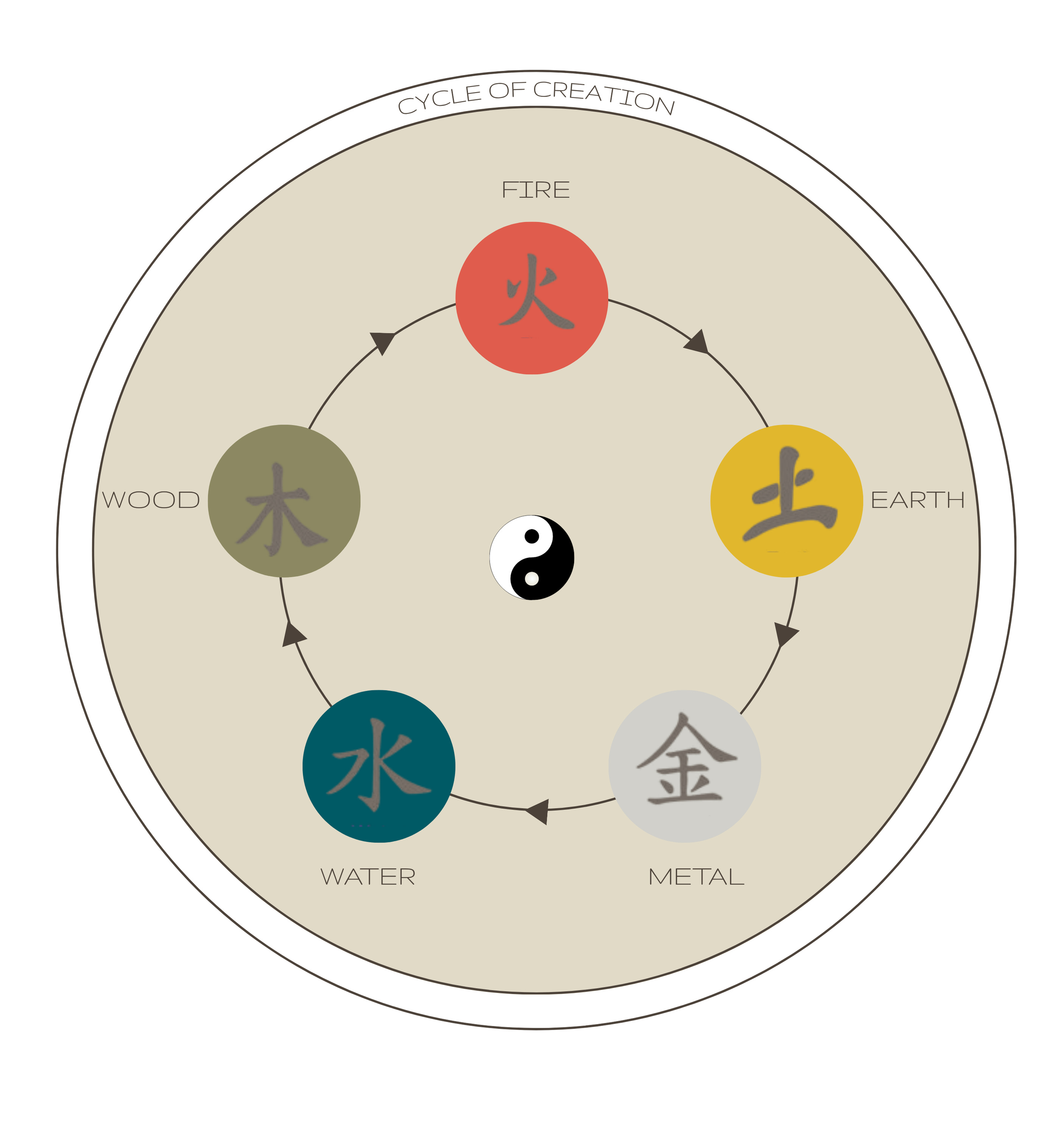
To visualize the Cycle of Creation:
Wood feeds Fire
Like how logs feed a fire - Wood helps Fire grow.Fire nourishes Earth
After Fire burns out, it leaves ash - which becomes part of the Earth.Earth produces Metal
Deep within the Earth, over time, minerals and Metal are formed.Metal creates Water
Cool Metal surfaces can gather Water droplets through condensation.Water nourishes Wood
Just like rain helps trees and plants grow - Water gives life to Wood.
This cycle shows how everything is connected and supports each other. It’s often used in BaZi, Feng Shui, and Traditional Chinese Medicine to understand balance, harmony, and flow in nature and life.
The opposite of the Cycle of Creation is the Cycle of Depletion (Reductive Cycle). When one element nourishes and supports another, it naturally becomes weakened - like giving part of itself to strengthen or energize the next, a quiet act of self-sacrifice. It runs in a counter-clockwise direction.
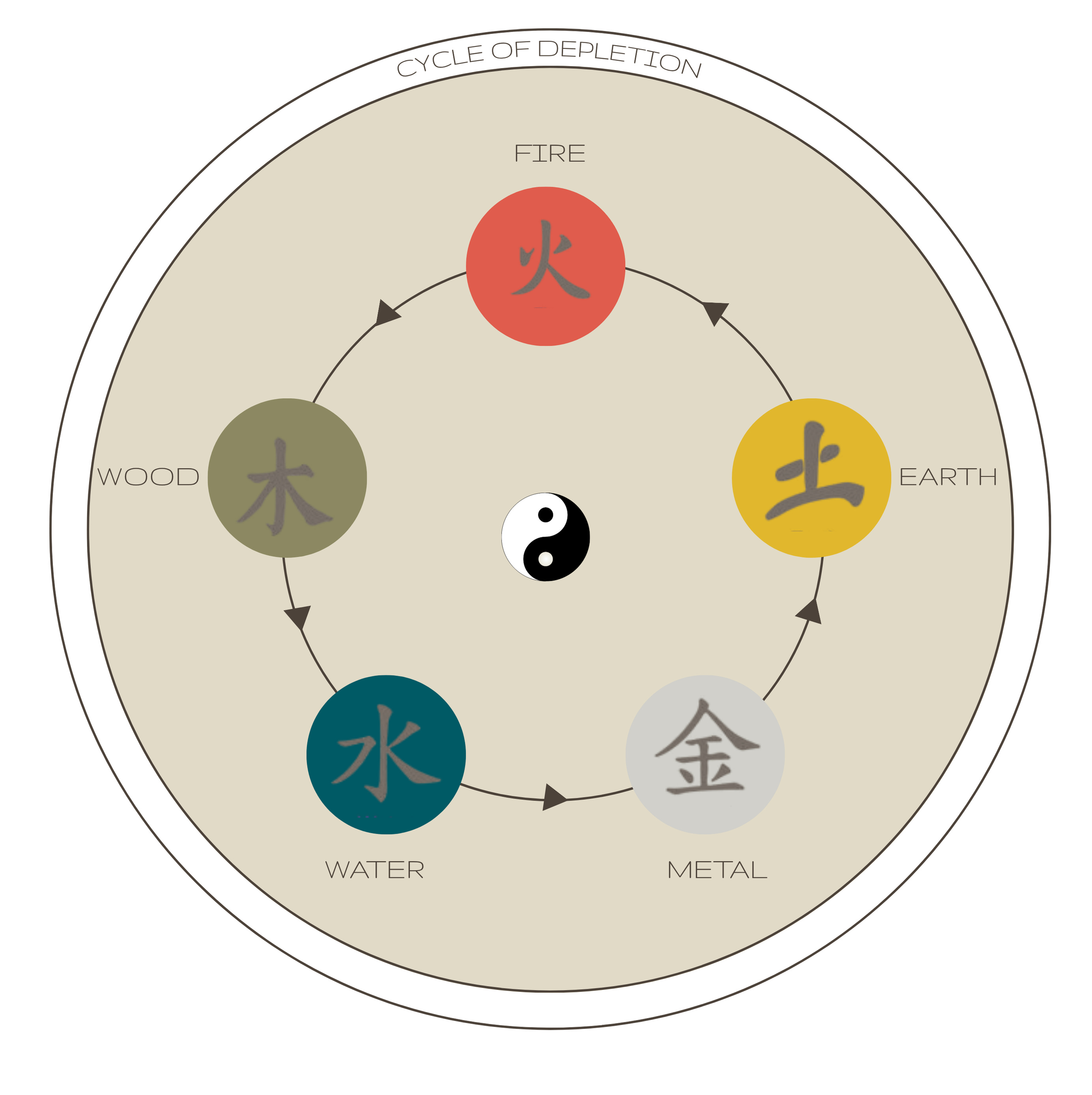
To visualize the Cycle of Depletion:
Wood is weakened when feeding Fire
Like how logs are burned to fuel a flame, Wood sacrifices itself to help Fire grow.
Fire is weakened when creating Earth
As Fire burns out and turns to ash, its energy is spent forming Earth.
Earth is weakened when producing Metal
Deep within, Earth gives up its minerals, slowly being depleted to form Metal.
Metal is weakened when creating Water
When Metal cools and condenses, it loses its strength to give rise to Water.
Water is weakened when nourishing Wood
Just as rain is absorbed by trees and plants, Water is gradually drained to help Wood thrive.
Last but not least is the Cycle of Control (Destructive Cycle). Instead of nourishing, this cycle shows how each element keeps another in check - maintaining balance and preventing excess. This cycle moves in a star-like direction.
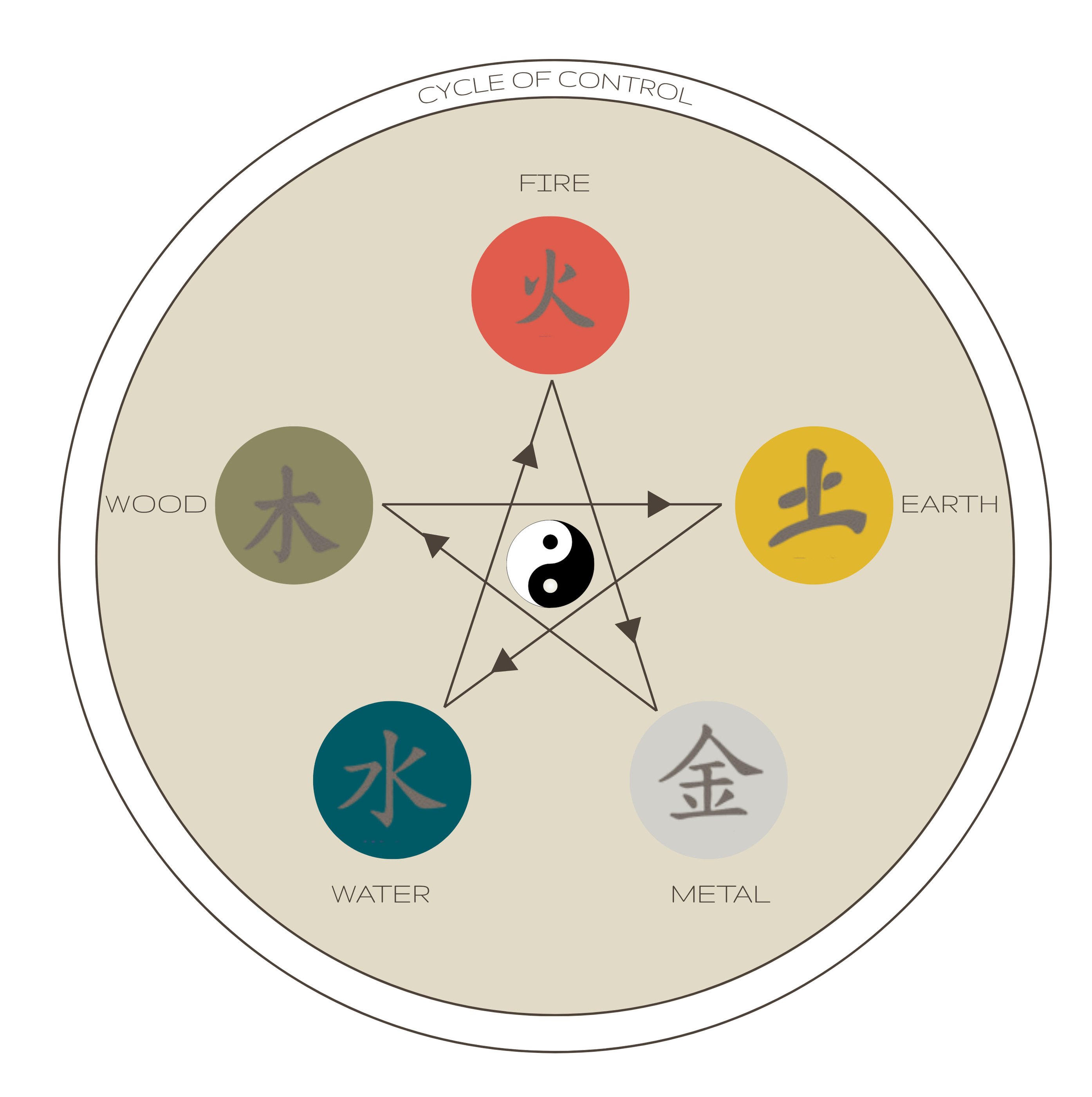
To visualize the Cycle of Control:
Wood controls Earth
Tree roots grow into and break up the soil, keeping Earth in balance.Earth controls Water
Earth (like riverbanks or dams) contains and directs the flow of Water.Water controls Fire
Water can put out Fire - keeping it from getting out of control.Fire controls Metal
Fire can melt Metal - shaping or transforming it.Metal controls Wood
Metal tools (like axes) can cut down Wood - limiting its growth.
This cycle is about regulation and harmony, like nature’s built-in checks and balances. When one element becomes too strong, another steps in to moderate it.
Why is all of this important in order to read our charts?
Because the eight characters that our chart is made up of (mentioned in the previous post) are either an element (heavenly stem) or a hidden element within the animal sign (earthly branches) and understanding the relationship of the elements therefore helps us understand if the elements in our chart are in balance, need to be brought to balance or if they are in conflict with one another.
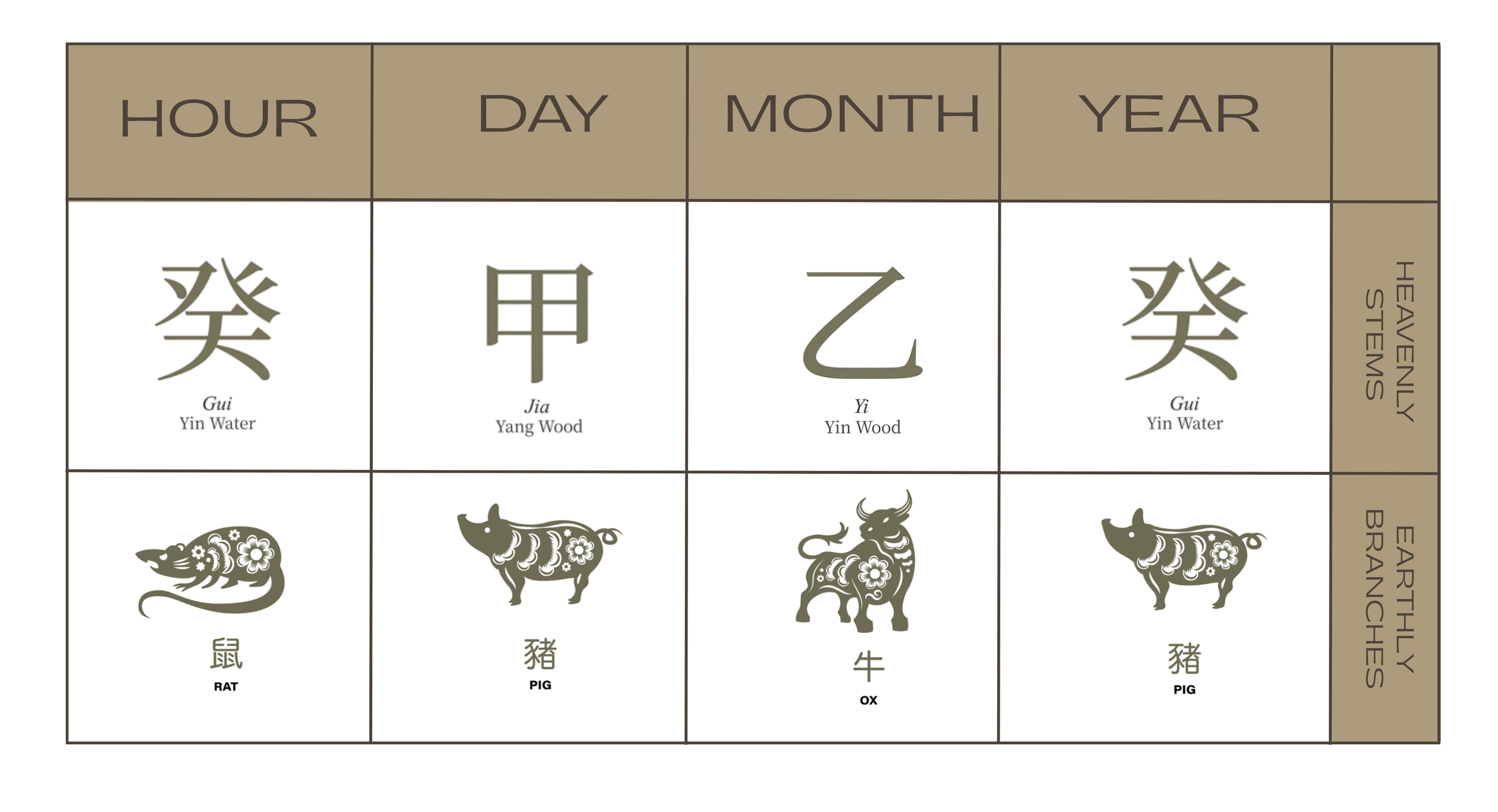
Once we dive deeper into the different pillars in future posts this will make some more sense.
For now we just need to focus on what the five elements are, how they interact and their individual qualities which brings me to the next points.
Let’s get to know each element in more detail. One thing to note, each element comes in a Yin and a Yang form and both have slightly different characteristics but for now we are focusing on the overall qualities to get familiar with each element.
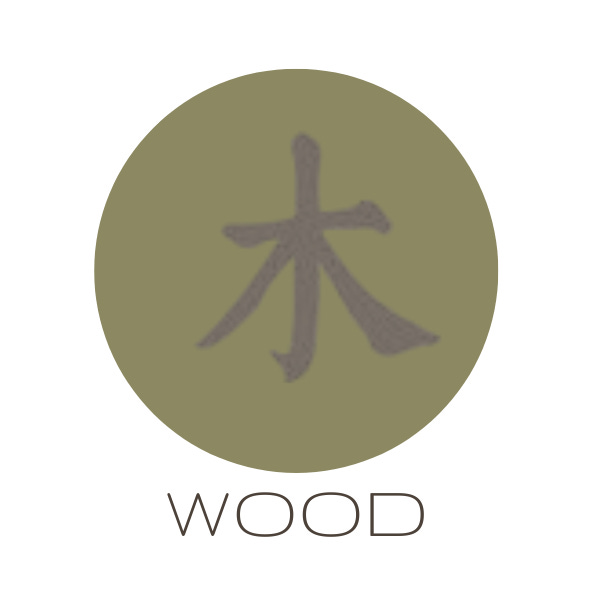
Wood (Mù)
Growth, expansion, and upward movement
Associated with spring, new beginnings, and vitality
Emotion: Anger (or assertiveness when balanced)
Organs: Liver and Gallbladder
Associated with the color Green.
Qualities: Flexible, ambitious, driven, creative
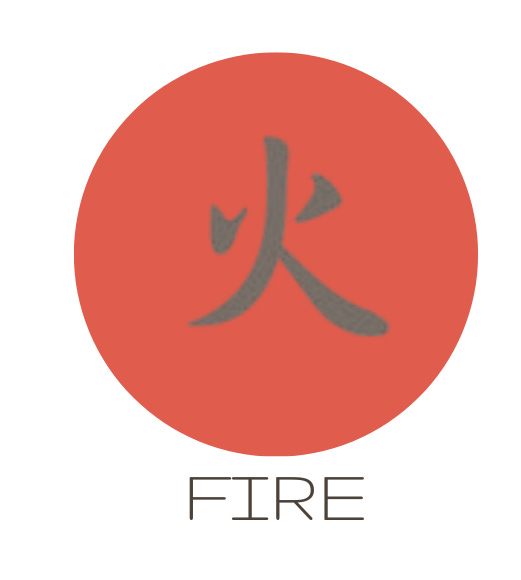
Fire (Huǒ)
Heat, passion, and outward expression
Associated with summer, joy, and peak energy
Emotion: Joy (or restlessness when imbalanced)
Organs: Heart and Small Intestine
Qualities: Charismatic, enthusiastic, expressive, warm
Associated with the color Red/Orange.
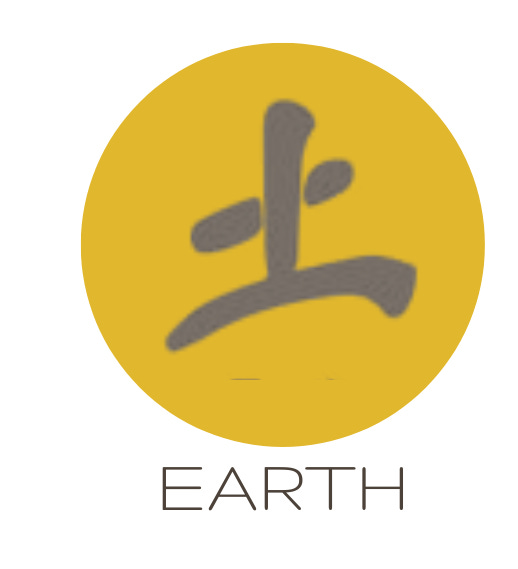
Earth (Tǔ)
Stability, nourishment, and groundedness
Associated with late summer or transitions between seasons
Emotion: Worry (or empathy when balanced)
Organs: Spleen and Stomach
Qualities: Caring, supportive, dependable, centered
Associated with the color Yellow.
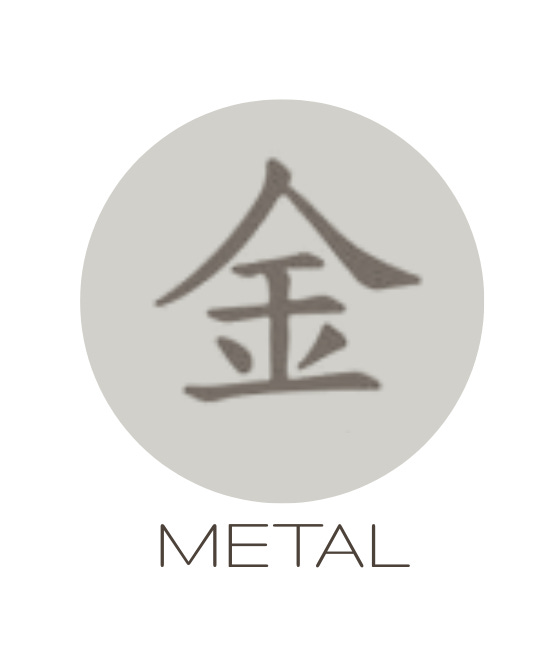
Metal (Jīn)
Structure, refinement, and clarity
Associated with autumn, letting go, and precision
Emotion: Grief (or reverence when balanced)
Organs: Skin, Lungs and Large Intestine
Qualities: Disciplined, focused, organized, discerning
Associated with the color White.
Water (Shuǐ)
Flow, stillness, and depth
Associated with winter, rest, and wisdom
Emotion: Fear (or courage when balanced)
Organs: Kidneys and Bladder
Qualities: Introspective, wise, fluid, adaptable
Associated with the color dark Blue/Black.
Understanding the Five Elements and how they interact is one of the foundations of BaZi - it’s like tuning into the energetic rhythm behind your personality, your patterns, and your path. As we move forward, we’ll begin to explore what your ‘Day Master’ says about you and how these elemental forces shape your inner landscape.
For now, simply sit with the elements - feel their qualities, notice their presence in your life - and let them begin to speak their language through you.
With Love & Gratitude,
Anissa